Saturday, January 8, 2022

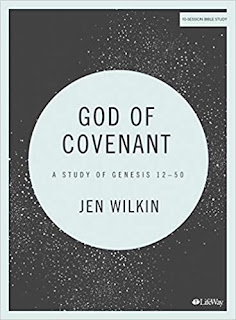
God of Covenant: Genesis 12-50 Session 2


Welcome to Session 2 of God of Covenant.  We are looking at Genesis 12-15 in this session.

Jen begins by saying that the Bible is a book about God but we often read the Bible asking it to tell us about ourselves before we ask it to tell us something that is true about God.

Attributes.  If this is who God is, how do I understand myself in the light of that truth.  What's true about God?

  • Reflect on who God is
  • See myself in light of that
  • What needs to change?
Genesis 12-15. The question Moses is answering is "how did the Israelites get to Egypt?" Abram's story is 14 chapters.  He is significant to who the nation of Israel is and who we are as the people of God, who also inherit these promises, and of who Christ is.

Genesis 12:1-3. God making a lot of "I will" statements.  God is setting the agenda for what is going to happen.  He initiates a plan.  "Now the LORD said to Abram."  Creation narrative started with "and God said."  Noah "and God said." The answer is "and it was so."

Verse 4. Answers with "so Abram went." When we move into the lives of these people, the "it was so" portion is now enacted by the people of God:
  • God speaks
  • People act
What does the Lord say to Abram? 
  • Go from his country
  • Go from his kindred
  • Go from his father's house
What is the message here? I want you to leave behind everything that is familiar to you.  

He went from Ur of the Chaldeans: An ancient city that was very advanced.  Large city.  Stone houses.  Hot and cold running water.  Educated people.  A modern city for its time.

He's going to a place not like Ur.  Hebrews tells us he lived the rest of his life in tents.

Abram vague about where he's going.  "The land I will show you" God said.  And then the "I will's."

Why do you think God takes Abram out of the familiar? The only way Abram will learn total reliance on God is to be placed in a situation where that's his only option.

What about us?  Have we experienced that?  

We see here the faithfulness of God. "I will make your name great."
The tower of Babel the people said this "that we might make a great name for ourselves."  God is saying "I am the one who makes the name great."

Abram is promised:
  • He will have a land
  • He will have descendants
  • Through him all the nations of the earth will be blessed (the future promise of Christ)
We see this also in Genesis 3:15 - the promise.  When God says this to Abram, He is pulling forth that promise.

Verses 4-9. Abram went.  Lot also.  What do we see Abram doing as he enters into the land of Canaan?  He's building altars.  He's establishing places of worship.  Where does it say he does this?

Verse 6. "To the oak of Moreh."  Also, "Canaanites were in the land."  Canaanites mentioned here.  Why? Moses is talking to the audience of people who had been in the dessert for 40 years, and what are they getting ready to do?  Go into the land of Canaan and take it by conquest.  He is building their resolve, building their courage, building their trust in a God who calls you in uncertainty to demonstrate His trustworthiness.  The oaks of Moreh were used by the Canaanites in places of worship to Pagan gods.  Abram was doing this in a place where Pagan practice was done years before.

Another altar is built at Bethel.

Verse 7. "To your offspring I will give this land."  Also in Galatians 3:16, Paul wants his hearers to understand that the ultimate fulfillment of this promise is Christ Himself.

First Test of Abram. There was a famine in the land.  What do you think Abram expected this land to be like?  He left a beautiful country for a famined country. This was unexpected.  Have you ever been there?  How does Abram respond?  He went down to Egypt.

What about Egypt would the original audience understand?  "I know there were plagues there, but at least there was good food. Why can't we just go back?" Egypt becomes, in the Bible, an arc-type for self-reliance.  Egypt is a place where they have the Nile river which always has food.

Isaiah 31:1 mentions Egypt.  Be looking for mentions of Egypt throughout the 39 chapters.

Verses 11-16. He fears for his own safety but is willing to jeopardize hers.  God has just told him "I am going to make you a great nation."  Abram is jeopardizing God's righteous plan.  Abram is here self-reliant, self-preservation.  Women in this time period and culture obeyed their husbands.  They didn't have the freedom we have today.

Failure to love God properly always results in failure to love others like we should.

Verse 17. Affliction.  Great plaques.  Notice that Moses always refers to Sarai as "Abram's wife."  Pharaoh also "your wife."  God protects Sarai when Abram does not.  What is Moses doing in the telling of the story?
  • Going into Egypt because of a famine
  • Plagues upon the Pharaoh
  • Leaving Egypt
  • Leaving with the wealth of Egypt
Moses is identifying with that audience.  He intentionally points them to their own story in this story.

Chapter 13. He's heading back to Canaan where he should have been.  "Tent had been at the beginning."  "At the first" - get back to where you are supposed to be.

Verse 4. "Abram called upon the name of the LORD."  Finally doing what he should have done.

Verse 5-7. Again mentions the Canaanites and now adds the Perizzites dwelling in the land.  What have we seen so far in the story?  Famine and strife.  What is causing strife now?  Having plenty.  

Verse 8-10.  Tension is growing.

Verse 11.  What do we see?  Lot wants the land like Egypt.  Egypt was a lot like Ur of the Chaldeans.  When things were uncertain, he ran for the familiar (Abram and Lot).  Lot settles outside the land of promise.

Verse 12. Abram settles in the land of Canaan.  Jen asks a question "why did Abram give lot a choice?  What if he chose Canaan instead?  Lot pitched his tent toward Sodom.

For us.  "I'm not in Sodom. I'm just pitching my tent toward Sodom."  Lot is slowly moving closer to a line.

Verse 13.  Great sinners.  Against the Lord.

Verse 14. The Lord said to Abram not to lot "lift up your eyes and look."  But lot "lifted up his eyes" in verse 10.  Abram was directed sovereignly by the Lord.  Covenant again mentioned to Abram in verses 15-17.  He builds another altar to the Lord at Hebron.
  • A reiteration of the Covenant
  • Lot who walks by sight
  • Abram who walks by faith
Chapter 14. A battle of the Kings.  In the midst of the battle, Lot is taken captive.  Abram must bail Lot out of trouble.  Why does Lot get captured?  It tells us in verse 12.  He now was dwelling in Sodom with his possessions.

Verses 14-16. Kinsmen.  Abram is the original kinsmen redeemer in scripture.  Does Lot deserve to be ransomed back?  No (and neither do we).  Melchizadek mentioned here also tells us something that is true about Christ.  There are several ways he is a reflection of Christ:
  • His name means "King of Righteousness"
  • He is the King of Salem - meaning "peace" - the King of Peace
  • He fulfills the role of both priest and King (like Christ)
  • He brings bread and wine when he comes out to meet Abram
  • He blesses Abram - meaning he is the greater and Abram the lesser
  • Abram gave him a tithe - a tenth of everything that he had
Jesus is the fulfillment of the type Melchizadek gives us.

Verses 21-24. God blesses those who bless Abram by them receiving a part of the spoils which Abram says he wants none.

Chapter 15. God has something specific to say to Abram on the other side of this battle. 

Verse 1. Abram needs to hear this because by fighting these kings in this valley, he has just announced his presence as hostile.  He will be seen as an enemy.  God will protect him.  God will provide for him.  This assurance is given.

Verse 2. Abram will reveal his greater fear: no heir.  Eliezer will inherit.

Verse 6. Amazing verse.  It's so important for us to understand that salvation whether OT or NT, is always by grace through faith.  Abram has faith looking forward to the cross.  We have faith looking back at the cross.  Abram's faith is rooted in the promises of God just as ours is.

Verses 7-8. First a question about the offspring; now a question about the land.

Verses 9-10. Moses is setting up a ritual known to the original audience.  This was how a covenant was ratified.  A covenant is a promise.  God's covenants are unilateral.  He commits to doing something for us whether we show up or not.  Abram is out cold for the whole ceremony.

Verses 12-16. Abram is not even conscious for the speech the Lord gives to Abram.  What's happening?  For the original audience who is wondering "is God's hand in all of the things we have seen?"  What is Moses telling them?  "These words were spoken by God before you even went into captivity."

The plan was already in place.  A picture of our salvation:
  • Divided flesh
  • God Himself passing
  • Us as good as dead
Verse 17. Why a smoking fire pot and a flaming torch?  Think about the original audience and how this would have spoken to them.  Wandering for 40 years what has the manifest presence of God looked like to them?  A pillar of cloud by day a fire by night.  Familiar images passing through the divided flesh demonstrating that God Himself ratifies the covenant.

Verses 18-21. God is fully aware of their fears and what is at risk.

This completes chapters 12-15 of Session 2


Thursday, January 6, 2022

God of Covenant: Genesis 12-50 Session 1


This is part 2 of Jen Wilkin's study in the book of Genesis. These next 10 sessions are Genesis chapters 12-50.

Session 1

Genesis is the seed plot of the Bible where all the stories of the Bible are going to be carried throughout it.  The Bible tells one big story across 66 books: creation, fall, redemption and restoration.

Jen asks this question: How is Genesis setting in place that pattern of our understanding for all of scripture?  She says that Genesis is the ultimate context giver for the rest of the Bible.  Genesis is absolutely necessary for us to understand the Bible as a whole. 

Secondly, we need to study it because of how Jesus viewed the book of Genesis.

Look in John 5.  Jesus said Moses wrote about Him.  Moses wrote Genesis.  We should ask "where do we see Christ in the writings of Moses?"  The first 11 chapters covered four major events:

  • Creation
  • The Fall
  • The Flood
  • Tower of Babel
The last 39 chapters are going to cover four more major figures:
  • Abraham
  • Isaac
  • Jacob
  • Joseph
"These are the generations of" - the introductory phrase to each new section says this phrase.

Jen continues with asking questions that are in the workbook:
  • Comprehension - the first day of the workbook
  • Interpretation - the next four days of workbook
  • Application - the last thing we should ask
She said that we cannot make application of a passage until we first say "what does it say?" And then "what does it mean?"  We cannot possibly get to "how will it change me?" until we do the other questions first.

Jen asks the question: "Who wrote the book?"  Moses - deliverer, law-giver, prophet, judge and author of the first 5 books of the Bible.  He was the spiritual father to the nation of Israel.  Forty years of wondering he wrote these books. 

Jesus attributed Moses as the author in Luke 24.  Moses probably used existing oral and written sources for parts of the narrative.

When was it written?  Roughly 3500 years ago.  1600-1400 BC.

To whom was it written? To the generation of Israelites who were ready to enter the promised land under Joshua's leadership.  He writes these books with the intention that it will give the Israelites roots (since he cannot enter) and shoots.  He will ground them in who they are: "this is your history."  He will point them toward who they should be.  He wants to give them a history and a law to show them how to live where they are going.

It covers a period of about 650 years of history.  It dates back to 650 years before the time they are reading it.  It's roughly 650 years between the story of Abraham and the time that Israel leaves Egypt.

When he sits down to write, he's going to tell them the things that happened in that period of time.

It's also written to us.  We can't hope to understand what it means for us today apart from what it meant to them then.

These books are written to a collection of people.  When we want to draw out an application from a text, what are we looking for? How does this change me? We are making an individual application from a text that was pointing at the family of God.  It would be easier to make application that applies to the family of God as a whole.

Personal application here should apply to the family of God as a whole.

Jen asks another question: What style is this written in?  Historical narrative, which is meant to be taken as fact.  There are allegorical themes though pointing to Christ.  These are real people who lived with a greater story than what we find here.

Chapters 12-50 are called the "patriarchal history." Many years (225 years) are covered in these next 39 chapters.  These are "arch-typal" stories that speak into the rest that happens through scriptures.

We have a very Western concept around history.  This is an objective retelling of what happened.  In ancient mid-eastern understanding of what it meant to write history was that you wrote it with the purpose of convincing someone of a particular idea.

So, when Moses sits down to write, he intends to convince us of something.  We should be looking for what he wants to tell us in these stories. The fifth question Jen asks is "what is the central theme of the book?  Genesis means "a beginning, a starting point in time."  Several themes are here:
  • Beginning of the world
  • Beginning of history
  • Beginning of sin
  • Beginning of redemption 
This is the story of God's chosen people.  The question the original audience would have carried is this: "how is it that the people of God came to be in Egypt?"

Chapter 11 sets us up for chapter 12.

Geneology: Genesis is tracing the righteous line all through the book. Seth-Noah-Shem.

Descendents of Shem: Traced all the way to Terah's descendents.  Look at the lifespan here as well.  Lifespan is shorter and shorter.

Chapter 11:26.  Abram will continue the righteous line.

Chapter 11:27. Three sons.  Nahor married his niece.  Lot is Abram's nephew.  Lot's father died.

Chapter 11:30. An important detail.  Before they got to Canaan, they actually lived in Haran first.  His father dies there.  At that point, they moved on from there into Canaan.  It seems there was more than one step to Abram's call.

In chapter 12, we should have in mind two points:
  • Abram is heading into Canaan land
  • Abram has a wife and a nephew which will figure into the story majorly
  • Sarai is barren
This is the scene before us.  The family to whom God will speak His covenant.  We will see the sovereign plans of God move forward because He's faithful.

We will see also that Jesus speaks truthfully when He said "Moses wrote of me."

This concludes Session 1.


Saturday, March 21, 2020

God of Creation - Session 10

These are my notes from Jen Wilkin and her teaching on Session 10 from Genesis titled "Dispersion & Descendants."

In this session, we looked at the Table of Nations.  Jen helped us to make sense of why these names are in chapter 10 and the way they are listed.

Jen said that using the maps in our Bibles is something we need to familarize ourselves with.  We don't understand them from the ancient times, but we need to develop these ancient map skills.

In Genesis chapter 10, we worked through the Table of Nations.  We also looked back at the prophetic curse that was spoken by Noah over Ham, Shem and Japheth.  After this, we moved through the story of the Tower of Babel.

The Tower of Babel is placed after the Table of Nations.  This to our thinking seems backwards.  The Tower of Babel study explains what the Table of Nations came to be.  The Table of Nations describes a dispersal of people into different regions, but then the Tower of Babel comes back and says this is how they all got dispersed to those regions.

Notice in the Table of Nations it does not say "and he died."  This list is looking forward and pointing towards things that are to come.

Genesis 10:1
The first part of this verse we have seen before, but it introduces a new part of the text with the descendants of Noah.

Genesis 10:2-5
The first grouping we get next are the sons of Japheth.  See how these names tie into some modern places we are familiar with.  Do any of these names help us?  They were in the Indo-European part of the ancient map region.

Scholars can identify that all Indo-European languages have a common ancestor dating to the stone age.

"Madai" traces to the Medes.
"Javan" traces to the Ionians or Greeks.
"Tubal" and "Meshech" correspond to the two rivers in Russia which are Tobol and Moskva.  The city of Tobol on the Tobol river.
The city of Moscow on the Moskva river.
"Tiras" traces back to the Etruscans.

Genesis 10:3
"Gomer" relates to the area of Germany.  "Togarmah" - the Armenians and Turkey are linked to that name.

Genesis 10:4
"Tarshish" - this is where Jonah flees to.  Considered to be in modern day Spain.  There's a city in Spain known as "Tartessos".
"Kittim" is the island of Cypress.  "Dodanim" also translated "Rodanim" and believed to be tied to Rhodes and the Rhone river.
It's fascinating how we can see some clues of how these ancient names still endure into modern times.

Genesis 10:6-9
We will come back to this.  You can see the rhythm was interrupted with an explanation.

Genesis 10:10-14
You've read a lot of these names and probably thought "I don't know who any of these names are."  But then we see "philistines" and we need to be aware that we are reading a list of the enemies of the nation of Israel throughout history.  Verse 6 gives us also a clear reference that we can pick up on regarding the enemies of Israel.

What Moses is doing here is signaling his original audience that this is about to go somewhere where you are going to meet a lot of scary people, and this is why they're scary - because they are descended from Ham's line.

Back to verse 8
In verse 8, it speaks of Nimrod a "mighty man."  Remember in Genesis 6:4 that passage that discussed the mighty men of old, the nephilim, giants?  Basically, there were righteous that married with the unrighteous and there was an unholy offspring.  These are the giants who later appear in the narrative of the spies.  Apparently, Nimrod is one of those first evil offspring of these unholy unions.

Back to verse 9
In verse 9, we read he's a hunter (Nimrod).  Well, that's nice, you may think; but his name means "we shall rebel." He's a mighty man, which can be translated as a giant but also a tyrant.

We find in verse 10 more about him.  The first place he sets up camp is in Babel.  Babel will become Babylon in the plain of Shinar.

If you're familiar with the story of the nation of Israel, it runs like this:
1450 - Exodus from Egypt
1400 - Conquest of Canaan after 40 years of wandering in the wilderness
930 BC - Northern and Southern kingdoms split.  Israel in the North.  Judah in the South.
721 BC - Northern kingdom falls to the kingdom of Assyria.

Genesis 10:11
Look at the next place Nimrod goes after Babel: Assyria, Nineva and built on from there.   587 BC guess who the Southern kingdom Judah falls to?  Babylon.

These are the major enemies of Israel.  Babylon in the Bible is an arc-type of disobedience, pride and rebellion.

Genesis 10:15
We find out about Canaan's line.  Remember what we saw in the previous lesson?  This is the line that is cursed by Noah in his prophesy.

Genesis 10:15-18a
These catchy words in verses 16-18 occur 19 other times in the OT accounts.  It's the most familiar list of the enemies of Israel as they go in to take over the land of Canaan.

Canaan's descendants are sort of on the top most wanted list of those who come against Israel.  Jebusites are in the city is Jerusalem all up until 2 Samuel 5 where the city is at last captured by David.  For a very long period of time the most sacred city is inhabited by the most wicked tribe.

Genesis 10:19-20
"Sodom" and Gomorrah".  These come later in the book of Genesis.  In verse 20, these are the people who settled in the African, canaan region.  She asked us to read Leviticus 18 and see some of the things God is forbidding people to do as they enter into the promised land.  A pretty shocking list.  Why is God thinking that any of His people would ever engage in these activities?  We know why.  Because this is exactly what is going on in the land of Canaan.  The land to which they, the Israelites, are going and often in the land from where they have come.

Genesis 10:21
We see the line of Shem.  Notice the linguistic connection to the semmites - the line of promise.  This is the Jewish nation coming through this line. "Eber" root name for the term "Hebrew".

Genesis 10:25
We have a break in the rhythm in this verse.  What does this mean "for in his days the earth was divided?"  It's a time reference for the listeners.  Think about the story that is coming next: the Tower of Babel, at which time the world is divided.  The sons of Shem settle in the middleeast - Persia area.

On the ancient map, you can see how it was an organized re-telling, giving geographical reference points for the audience Moses is writing to.

Genesis 10:32
You can hear in this verse an echo of be fruitful and multiply language.  This list is made up of 70 names of people, regions or clans.  Do you think that was an accident?  We've already seen a geneology of a line that had 7 names.  Then a geneology of Seth with 10 names going back to Adam.  Here in the Tower of Nations we see 70 names in which 7 and 10 signify completeness.

This is not an exhaustive list.  Moses is making a point, telling a story in a particular way.  He wants us to know what is going on when Noah speaks his prophetic word over his sons.

Looking back at Genesis 9 let's look at what Noah said.  Verse 25 is effectively fulfilled when Joshua leads Israel into the promised land.  Canaan becomes a servant to the children of Israel.  In verse 26 do you notice that when he speaks the blessing he doesn't say "blessed be Shem?"  He says "blessed be the Lord, the God of Shem." This signifies that Shem's line is the righteous line by whom the name of the Lord will be held high.  In verse 27 it's very clear here as well that Canaan will be a servant.

What about Japheth? Shem is the line of promise, which means that Japheth's descendants and Canaan's descendants are not Hebrews.  Canaan's descendants are pagans.  

Who are Japheth's descendants?  Verse 27 is essentially saying "may God enlarge Japheth and may it be as if he were an honored guest enjoying all the wealth of Shem."  Japheth is to be invited into the tents of Shem and be treated as though he is family.  Think back on the map in your homework.  Japheth's descendants all settled in that Indo-European region.  If you were to overlay that map with a map of the world at the time of the writing of the gosepl of Acts, this was when the gospel was preached first to the Jew and then preached to the Gentile.  It is preached to the descendants of Japheth.  This is our story.

Genesis 11:1-3a
They are in that whole region where Babylon will be.  "Come, let us make bricks."  This is familar speech.  The way God spoke in the creation account when He creates human beings.

Genesis 11:3b-4
They keep saying "Come, let us" - do what we want.  Human beings here taking counsel with one another or in the manner that God takes counsel with Himself in the original creation account.

What do they want to do?  A building project: make a city, make a tower, make a name for themselves.  They were willing to make their own bricks - determined.

Notice "let us make a name for ourselves."  The Hebrew word for "name" is Shem.  God is jealous for His name and His glory, but humans are now wanting to make their name great.

"With its top in the heavens" - NIV translation "a tower that reaches to the heavens."  Tower really does not describe it here, but it's actually a ziggerut.  This looked like a pyrimad and had stair steps up the side, less of a tower and more of a stairway to heaven.

Remember in Isaiah 14:13-16 it says "I will ascend to the heavens" description of lucifer's words?  That's what we see playing out here.  The city is a representation of self-sufficiency and wrong motives.

Genesis 11:5
God came down to see.

Genesis 11:6a
They are way too able to get together and collaborate - look what's happened to sin - Adam and Eve individual act, but now a growing sophistication of sin - figuring out ways to sin together.

Genesis 11:6b-9
"Come, let us go down."  God re-establishes Himself as creator God and the one with the right to rule. Dispersing them is a gracious act of God.

"Babel" in Babylon means "gate of God" but in Hebrew it means "confusion." God ensures by confusing their language and dispersing them they will do what He's told them to do - to be fruitful and multiply.  God's plans will not be thwarted.

What partner story do we see?  Pentecost.  Acts 2:1-13.  Many different languages and the people need to hear one message.  God sends His spirit down on His sons and daughters and they merge speaking in the tongues of the known world to all who need to hear it.

For Us
We love to build "cities".  We love to build "towers."  We are called to not build our own habitations (I Peter 2:5).

The Last Creation Act
Revelation 21:1-7.  Notice: God's final word is to us "make all things new" and "it is done." 

Jen ends praying the words of the elders as they cast their crowns before the throne in Revelation 4:11.

Wednesday, February 5, 2020

Genesis: Session 9 "God's Covenant with Noah"

In this session, Jen uses the first 4 minutes to give an introduction to the reason for the flood.  She says that sometimes we question why God had to do this.  I didn't take notes on this part.

Jen begins by saying Noah not only has to come to terms with the massive destruction that has taken place, but also the loss of extended family which is very personal.

She asks that we think of a news coverage of a major disaster.  Think of Noah now - who walks out and sees massive destruction.  There are only 7 now who can help him restart humanity.

Genesis 8:20-22
He walks out of the ark and in verse 20 is his first act - worship.  The 7th day of waiting to come out of the ark.  This correlates also with the day of Sabbath.  He takes up the true work of worship.

Interestingly, he offers a sin offering.  What's the significance of that?  He atones for his personal sin.  What does Noah know?  That all of the time the ark carried him and his family through this flood, there was still a desire for sin, Jen says.

We see in these verses also declarations of what God will never do again:

never curse the ground
never again strike down every living creature 

Genesis 9:1-2
It's clear language here pointing back to the creation narrative.

Genesis 9:3
Jen says here that something interesting happens.  Do you remember back in the creation account how everyone was a vegetarian?  Well, all of a sudden God is saying you are going to have animals and plants for your food now.

Genesis 9:4-7
God will now be specific about this.  As will be the case for the rest of scripture, she says we will see great care given to any discussion of blood.

What is going on here?  Why would God now say the animals are yours for food?  In the first creation, no blood was shed.  In the re-creation now they must shed blood for survival.

She says it seems God is heightening the understanding that in order for humans to live, blood must be shed.

In verse 4, Jen begins to discuss the Jewish dietary laws.  It's required that all of the blood must be drained out in order for the animal to be eaten. 

Why would God be concerned with this?

Look at Leviticus 17:14 "For the life of every creature is its blood; its blood is its life.

Remember that this original audience here is the Israelites who read this.  They understood exactly what this meant.  They're heading into Canaan.  Do you know what the Canaanites practice was?  They would drink the blood of a wild animal to acquire its life force to make them stronger, more fertile and for spiritual amplification.

A detestable practice to the God of Israel.

In verse 6 we see that it ties back to that we are image bearers and makes human life sacred.

What's being given here, Jen says, is a proto-typical government.  A law code that precedes the greater law code that's given much later.  It's a way for Noah to begin to govern in this new post-flood era.

Look what it's intended to do:  Whoever kills someone, will be put to death.  That's tough language.  What it's doing though is preventing the spread of sin.  It will also prevent over-punishment.

Do you remember Lamech?  What did he do?  A guy made him mad so he killed him and bragged about it.  This gives a way to govern which combines mercy and judgment and makes sure that the penalty fits the crime and does not exceed it, Jen says.

Genesis 9:8-17
The word covenant is repeated in this section seven times.

Why over and over does God mention the word covenant? Because if you are Noah, the first time you see a dark cloud on the horizon, you're going to lose it and think "does the covenant still stand?"

God's covenant with Noah is unilateral.  He establishes it, and establishes it on His terms.  This covenant with Noah is eternal.  It will endure according to His character for whatever period He determines.  God's covenant is also gracious.

Not only is the covenant gracious, but God is gracious to repeat over and over again to Noah that His covenant stands.

God doesn't just tell Noah that the covenant will stand though.  He says there will be a sign associated with the covenant - a rainbow.

Question About The Rainbow
The question Jen asked is why a rainbow and what two elements have to combine in order for a rainbow to form?  Light and a rainstorm are the combination for a rainbow.

How Jesus Refers to Himself
Think about how Jesus refers to Himself in the NT.  In John 8:12 He says "I am the light of the world."  Jen states "when we think about God or think about Christ, we think about Him in general terms.  It's when we endure a "rainstorm", a time of trial, that all that beauty that is tied up in that light begins to be refracted for us (just like the refractory light that makes a rainbow).

We then begin to see the blue of His holiness, the purple of His sovreignty, the gold of His royalty, and the green of His eternality.  We begin to understand the red of His mercy."  We see Him in a deeper, richer, broader way than we would otherwise.

I Have Set My Bow
We can miss the fact that when He says "I have set my bow in the cloud" it's intended to make us think of a weapon (instead of the familiar thought of a rainbow).  The idea here is that God is laying down arms, acting in peace towards Noah and his family.

A Reminder
This sign of the rainbow will be seen to remind Noah "never again, never again."  This story is just a shadow of a much bigger story that is yet to happen.  Because on a day, Jen says, several thousand years to come, there would be another flood of wrath, and it would be poured out not on all humanity but on Jesus Christ on the cross.

Because this flood of God's wrath was poured out on Him it is diverted from us.  So anytime you look at the cross, you can remember "never again, never again.  It is finished."

Genesis 9:18-19
We've already seen these names Shem, Ham and Japheth mentioned earlier.  Perk up your ears anytime you see the word Canaan (Ham was his father).  He mentions also the disperson here.  We will see more about this in session 10.

Genesis 9:20-27
There's a lot to untangle in these verses.  Noah is going to be caught in a state of undress and treated disrespectfully.  He then wakes up and starts prophesying.  This is not just ranting but a prophetic word that he speaks.  It's interesting to note in verse 21 that when he drank of the wine and became drunk, that this is actually the first mention of wine in scripture and immediately related to drunkeness.  This is not a favorable picture painted here.

Notice also that when scripture says he planted a vineyard, that this term vineyard is translated elsewhere as garden.  Pay attention to what's going on here.

Notice the fruit of the garden is going to lead him into sin and a fall.  This sin is going to expose his nakedness.  His nakedness is going to be covered by another.  Not only that, but the father's sin is going to lead to sin in his own son Ham, which will result in a curse on posterity.

There is a repetition happening.  We have a second fall narrative.

So here is Noah drunk, naked and lying in his tent.  Ham comes in.  What is implied in the text?  Ham mocks his father.  How does Shem and Japheth respond?  They very carefully and respectfully try to restore Noah's dignity.  

Don't miss this:  the reason that Ham sins is because Noah sinned.  This is how sin works.  It doesn't just affect you but affects others.  Remember the pattern we already discussed in previous sessions regarding sin?

  • I see it
  • I want it
  • I take it
  • I share it
Here's why Ham's behavior is so reprehensible:  he celebrates the sin of a righteous man.

We do this as well.  Jen asked us to think about a church leader who falls because of sin.  We sometimes will say "I knew it.  I saw that coming."  We tend to celebrate this righteous person falling.  Why?  Because we don't want to feel judged by their righteousness, so the second we see a chink in the armor, it validates all our own insecurities.

Noah speaks this curse in verse 25 to Canaan not to Ham.  Why?  A father shamed by his son pronounces a curse that will cause a father to be shamed by his son - a bit of irony here.

"Canaan" is in the prophecy three times (verses 25, 26 and 27).  What's happening here?  Canaan's descendants are whom Moses is preparing Israel to subdue as they go into the promised land.  What is being established here is a right to the land.  He is reassuring his original audience through the way he sets up the narrative.

In this curse we can see mercy.  He does not curse all of Ham's line only part of it.

Genesis 9:28-29
We reach the end of the first geneology.

Think About This
We have no record of the last 350 years of Noah's life.  What the text seems to imply here is that though there are many worthy things of comment in the first 600 years of his life, that in the last third, there wasn't much to say.

For Us
We are called to a long obedience in Christ - moving in the same direction, forward.
  • we shouldn't coast
  • we shouldn't lay off of obedience
  • As we age, we should continue in obedience, continue in righteous living
The Question To Ask
Will I continue to do those things that constitute righteousness?  "The longer we grow in holiness, there is more continuity in what we say and what we do."

In hearing this story of the flood, Jen states her prayer is that we would have ever-shrinking hypocrisy and that we would not live in fear of the wrath of God as the unbeliever must.

There will be storm clouds, she says, that will gather on our horizon.  There will be rain that will fall in our lives, but we never need look on that and say "is God judging me?"  Because no judgment remains for the children of God.

Closing
Song of Solomon 8:7a "Many waters cannot quench love, neither can floods drown it."

Next: Session 10 "Disperson and Descent"


Steadfast Love: Session 5 "Storm"

Session 5 has a bit more note taking than Session 4.  She focuses on Psalm 107:23-32 in this session.

Some might be dreading this part of Psalm 107 about the storm. 

Maybe you haven't been through a storm yet and can't image what that would look like.  Maybe you're thinking:

 "Would I still love the Lord in it? What would it cost me?"

Maybe you're feeling anxious about the season of a storm in your life.

Others may be in the middle of a storm right now and thinking "I just need some encouragement.  I need to know I'm not alone in this."  

Maybe you're just wanting a fresh word from the Lord from scripture.

The thing about storms is that we don't have any control about when it hits or how it hits us.

The men on the ship in scripture were working men on the ship.  Their job was hazardous to say the least.  Out of nowhere a storm hits.  

The same with us.  We're going along in our life and out of nowhere, unexpectedly a storm comes.

We need to realize that life doesn't always go according to our plans.

We'll come to the place in our storms where we will want to find our hope in His steadfast love.

Lauren then tells several stories of her storms of miscarriages and her husband Matt's brain tumor and surgery.  She encourages us that the grace for our storms will be there.

God will be the stability in that moment.

Look at Isaiah 33:5-6:

God is supremely esteemed.  His center holds.  Zion brims over with all that is just and right.  God keeps your days stable and secure - salvation, wisdom, and knowledge in surplus, and best of all, Zion's treasure, Fear-of-God. (the Message)

For those who are in the storm: He will be your stability in it.

For those who are afraid, anxious about the storm that is coming: Take heart that He will be with you in it.

We live in a fallen world and storms will come.

For Lauren, the Lord sovreignly was in the storm of Matt's illness and brought healing through surgery, chemotherapy and radiation.

Lauren said it wasn't her counting on his healing that kept her through it, but counting on the Lord being present in the middle of it.

Her challenge for us this week is that no matter what storm it is or where we are in the storm, or anxious about one coming, that we would find all the ways that He is present.

Our storms, many times, will pluck up any other anchor we are holding onto for our stability.  He will put in us deeper anchors through our storms - the anchor of His steadfast love.

He is the Lord of our storms.  

Maybe the outcome isn't healing.  

Maybe the outcome isn't what we had expected, but we still have a hope to cling to.  

We have an anchor of stability in Jesus Christ.

We have hope in His steadfast love.

Steadfast Love: Session 4 "Folly"

This particular session is quite short with the note taking on Psalm 107:17-22. This session focuses in on "Folly".  

What is folly?  

Basically it's when we choose to do things the way we want.  It's as if we say "I know what's best for my life."

Look at Proverbs 3:5-12.  The Message version says:  

Trust God from the bottom of your heart; don't try to figure out everything on your own.  Listen for God's voice in everything you do, everywhere you go; He's th eone who will keep you on track.  Don't assume that you know it all.  Run to God!  Run from evil! Your body will glow with health, your very bones will vibrate with life!  Honor God with everything you own; give him the first and the best.  Your barns will burst, your wine vats will brim over.  But don't, dear friend, resent God's discipline; don't sulk under His loving correction.  It's the child He loves that God corrects; a Father's delight is behind all this."

As we dive in to where our folly lies, consider that He is a loving Father.

Lauren asks us to be willing to be humbled by seeing the places where we've been foolish.  She encourages us that we are not alone and that when our folly is exposed, it's the first step in getting healthy.

When our foolishness and folly is exposed, we will also receive the steadfast love of the Lord that is everlasting.

Next: Steadfast Love - Storm

Saturday, February 1, 2020

Genesis Session 8: The Flood

Again, these are my notes from session 8 with Jen Wilkin for Genesis.  Please use with your small group or just individually for study.  

We are looking at the story of Noah in the context of what has come before.  Jen says, never read a story in the Bible independent of what has come before and what is going to come after.

If we believe something like this happened, we should expect that it's recorded not just by one culture but by several cultures. There are literally hundreds of recorded tales, Jen says, about a flood that happened.  These stories have been gathered by scholars and analyzed.  There's a lot of debate out there of whether the flood was global or local, she says.

The only way the flood stays in orthodox belief is to say it was regional; it wiped out all human kind except the 8 people preserved. Why? Because the whole point of the story is that God is cleansing the earth of all its wicked inhabitants.  Because of the doctrine of original sin that says we're all born with a bent towards sin, it makes sense, Jen says, that even if the flood was regional, all human kind not on the ark would have had to be swept away.

Original Sin
Because Adam messed up, we have to walk around from our earliest days wanting to commit sin.  The God of the universe orchestrated this original sin and made Adam our representative.  One of the most difficult pieces of coming to terms with the flood narrative, says Jen, is that it's only a temporary solution.

Genesis 6:1-10
Notice that the text is mentioning Shem, Ham and Japheth.  This should raise our awareness and look for those names to occur again.

What do we see here?

  • Noah was a righteous man
  • He's the great-great-grandson of Enoch who walked with God
  • And Noah also walked with God following in the line of his ancestors
Noah is dwelling in a time when wickedness is pervasive.  The NT refers to him as a preacher of righteousness.  He will be given a task of building the ark which will be difficult because of the era he is living in of wickedness.

Genesis 6:11-13
Notice the word "corrupt" used three times.  Notice how blame has been established:
  • The people have corrupted the earth
  • Violence because of the people
He says in verse 13, He will destroy both them and the earth.  The root word for destroy  is corrupt.

Genesis 6:14-22
When you hear verse 22, does it sound familiar to you?  What Moses will do when he writes his narrative throughout Genesis, is he employs the same patterns of language, Jen says.  Why is this? Because he wants his listeners to be able to remember, so he's giving them listening and memory tools.

Look at verse 13:  "God said."  Look at verse 22: "Noah did."  Do you feel the rhythm of the creation account here?  But rather than God being the one who accomplishes the work, Noah is brought in as a partner to the process.  This is a good picture of our sanctification.  In the process of sanctification by the power of the Holy Spirit, we work through grace-driven effort to grow in holiness.  We see that here in a typology that it's God who gives the command to create and Noah carries it out.

God has specifics.  He has an exact plan.  He wants Noah to know what it is and be able to carry it out.  God tells Noah exactly what's going to happen.

In verse 18, a word is introduced in the Bible for the first time: covenant.  The first mention of God making a promise with humans.  It's not the first time we've seen the concept though.  We saw a covenant implied back in the garden after the first sin - when God slays the animals and clothes Adam and Eve and promises the seed will come from the woman.

They were to bring two of every kind, male and female.  This too is an echo of the creation narrative of Adam and Eve to symbolize the completeness of the pair.  

We need to know how Noah heard this command.  Where does Noah live?  In the desert.  This command is: 
  • ludicrous (what if Noah fails?)
  • laborious (100 years)
  • protracted (lasting a long time)
  • expensive (great financial sacrifice)
But "Noah did this."

Genesis 7:1-5
We see here again "God said" and "It was so" - Noah did. Notice 7 pairs of animals clean and a pair of unclean (we will see why in the next session).

Genesis 7:6-10
He spends 7 days waiting for rain (the first period of time).  The next interval is 40 days and nights of rain.

Genesis 7:11-12
In these verses, it's just as God had said in the previous verses.

Genesis 7:13-16
First we have this litany which feels like to us a needless repetition.  But what is it?  It's "God said" and "Noah did", and it happened just as God said.  We then have this statement "and the Lord shut him in."  Think about this: 7 days of waiting before the Lord shut the door.  He shuts the door.  Why?  Because their safety will rely wholly on Him.

We see three things regarding this:

1) we see the perfect security that is found being in the ark.  Look at Revelation 3:7b .... "what He opens no one can shut and what He shuts no one can open."  Noah's ark corresponds to the NT regarding baptism (I Peter 3:20-22).  Just as Noah and his family are sealed in the ark and pass through waters of death and raised to life on the other side of the flood, so also we are buried with Christ, pass through death and are raised to life as He is raised from the dead.  The door being shut and sealed corresponds to us being sealed by the Holy Spirit (Ephesians 4:30).

2) God's grace.  We see that God is slow and waits.  When all of the preparations have taken place, and nothing else left to be done, the last thing that happens is the door is closed.  Up to that point, the door of salvation remained open to anyone who would come.  Noah preached for about 120 years about the coming judgment.

3) There is an end to grace.  A word of warning here.  The most significant parellel here is John 10:9 "I am the door.  If anyone enters by me, he will be saved."  So we as believers in Christ, sealed with the Holy Spirit can know that we will, as well, persevere and be safe in Him.

Genesis 7:17-24
The third time interval in the flood account - 150 days the waters prevailed.

Genesis 8:1-5
"God remembered Noah."  What we take from this phrase and where we see it elsewhere in the scriptures is that God remembered His promise to Noah.  It was time to bring it to pass.  God sent a wind over the earth and the waters receded.  The word for wind is Ruach.  Do you remember that from Genesis 1?  The Spirit hovering over the waters.  What do we see here again?  We see Ruach hovering over the waters.  We see the earth in the flood has been returned to its primordial state.  This is a de-creation narrative.  The earth is now the way it was in Gensis chapter 1 when the Spirit hovered waiting for the sign from God to speak and have light come in play, to separate the waters from the waters, and the waters from the dry land.  We're going to see the same things happen now.  We begin to see dry land separate from water in verse 5.

Genesis 8:6-7
The seas are returning to their proper boundaries and the dry land is now emerging.  He sends out a raven.

Genesis 8:8-9
Forty days the waters are receding and a dove is sent out.  Now we will have 7 days waiting for the waters to recede and the dove returns.

Genesis 8:10-12
The symbol for peace is the dove with the olive branch because God's covenant is being made with Noah.  When the dove does not return, Noah knows there is enough dry ground that they now can leave the ark.  This last period of 7 days when the dove does not return, is a total of 6 different increments of time.  Why do you suppose that is?  Because in the creation account of Genesis chapter 1, we had 6 intervals of time to describe creation.  So now what would correspond to the 7th day, the day of Sabbath.  What happens?

Genesis 8:13-17
This correlates with Genesis 1:24 (read this).

Genesis 8:18-19
God said and it was so, like the creation account.  Now here we have Noah and his family and all the animals to go forth and fulfill the cultural mandate again.

Notice that Noah doesn't walk out of the ark for himself; God called him.  Does this remind you of any NT story?  Lazerus (John 11).  Jesus walks up to a sealed door and calls a dead man to life.  Why doesn't Noah exit on his own?  Because it is God who speaks us into life.  This scene is a re-enactment of John 11.  Passing from death to life.  The flood marks the psyche of Israel and also all who believe.

Closing
In closing, Jen reads Psalm 29.  Our God sits enthroned above the flood.  He brings us safely through and meets us on the other side with an olive branch and a call to life.

Next: Session 9 "God's Covenant with Noah"